






Bruce O’Neill, Ph.D., professor of sociology and anthropology, has earned recognition for his book, Underground: Dreams and Degradations in Bucharest.
The book won the Anthony Leeds Prize in Urban Anthropology and the William A. Douglas Prize in Europeanist Anthropology.
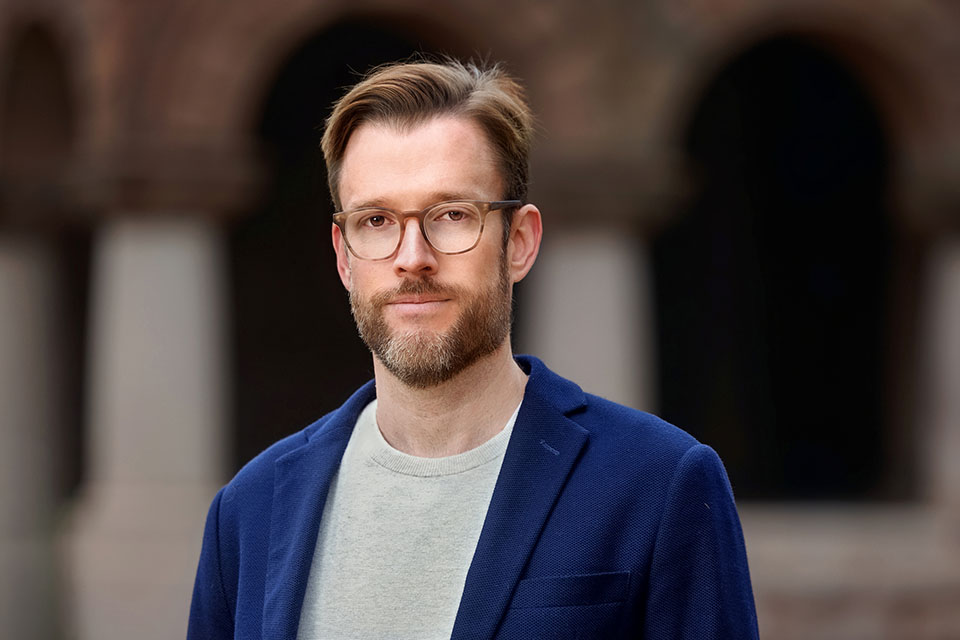
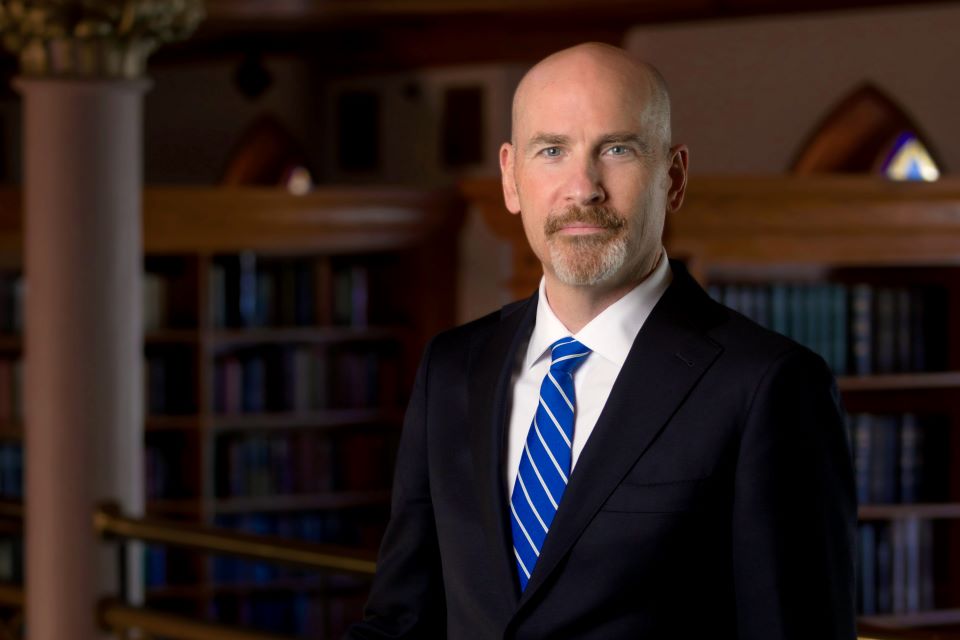
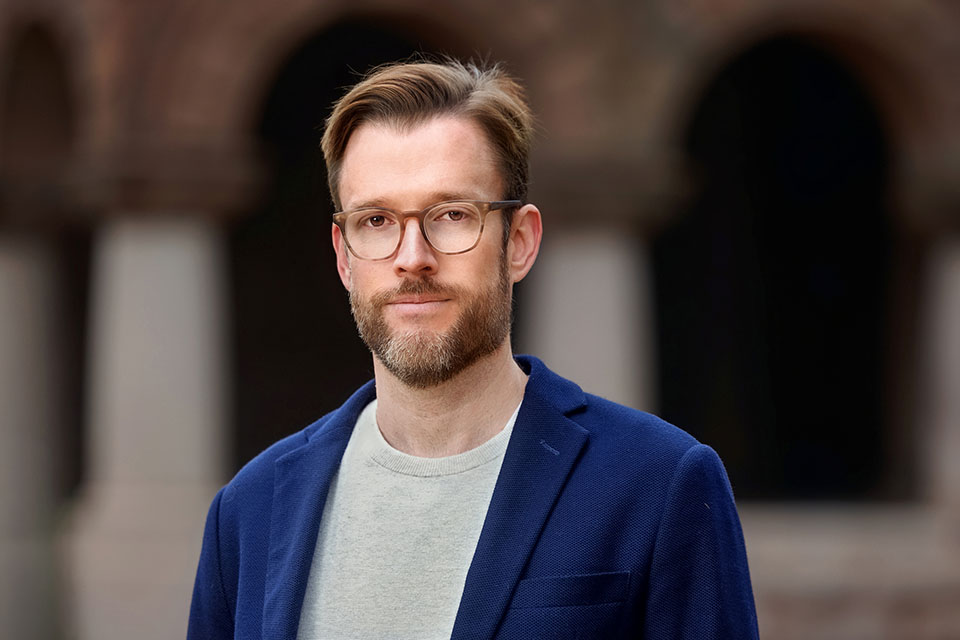
Bruce O’Neill, Ph.D., is a professor of sociology and anthropology at Saint Louis University. Photo by Sarah Conroy.
“Underground takes the city of Bucharest as an opportunity to explore how rising inequality and concerns about affordability push urban life beneath city sidewalks,” O’Neill said about his book. “Following Romania’s EU accession in 2007, foreign investment fueled new middle classes that city officials accused of overwhelming the city by congesting roads, polluting the air, and degrading the quality of public spaces. To address concerns about overdevelopment, city officials proposed moving the middle classes underground.”
The Critical Urban Anthropology Association (CUAA), which gives out the Leeds Prize, praised O’Neill’s work for its original and deeply innovative new approach to urban anthropology in a theoretically ambitious book.
“The book is a tour de force of ethnographic imagination and careful methodology, allowing urban anthropologists to derive transposable new insights into their own ethnographic research about the residents of contemporary cities by re-envisioning the relationships between the vertically stratified spaces they live and work in, their class positions, and their life chances under the conditions of late neoliberalism,” wrote the CUAA when announcing the Leeds Prize.
The Society for the Anthropology of Europe said the book earned the Douglas prize because of its “innovative conceptual framing, elegant structure, excellent writing, and empirical richness of the book. Underground stands out as a landmark contribution not only to European studies but also to global conversations on urbanity, modernity, and inequality.”
O’Neill said he was thrilled and humbled by the recognition.
“As a scholar of both the city and of Eastern Europe, the books previously acknowledged by these prizes have shaped since my earliest days of graduate school my sense of how to research and write,” he said. “These are also the books that I return to regularly for inspiration and that I share eagerly with students in my classes. It was both thrilling and humbling to have Underground acknowledged in this way.”
O’Neill’s research explores the cultural and spatial politics of cities with an ethnographic focus on Bucharest, Romania.
“I first visited Bucharest to research my master’s thesis, and it immediately captured my imagination,” he said. “I’ve now been returning for fieldwork for two decades, and Bucharest continues to inspire me to think more deeply about everyday life and the urban experience.”
The book’s inspiration came to O’Neill during one of his previous fieldwork trips while working on his previous book on homelessness in Bucharest. At the city’s main railway station, the Gara de Nord, he discovered unhoused people squatting in steam vents and sewer canals beneath the station, and soon learned that they relied on low-cost kiosks in Metro stations to earn money, buy supplies, and stay warm.
“Initially, I planned to study how life for these communities extended below ground, but by the time I began fieldwork, the municipality had cleared these encampments in the name of health and safety,” he said.
With the encampments cleared, O’Neill pivoted and kept working.
“The clearance coincided with campaigns for urban beautification that unexpectedly targeted the middle classes as a source of blight,” O’Neill said. “What became very clear as the fieldwork for this book took shape was that the middle classes were not the beneficiaries of this gentrification process as they so often are. Rather, I found that in a polarizing economy, Bucharest’s middle classes were getting swept up by the very structural forces of gentrification that usually target the poor in ways that were both familiar and novel.”
O’Neill said a goal of the book is to encourage other scholars to view belonging in
a different light.
“What I hope this ethnography of dreams and degradations ultimately makes clear is the need to account for the city’s verticality when thinking about the politics of belonging,” he said. “Scholars have developed a rich set of conceptual tools for attending to horizontal questions about who is ‘in’ the city and who has been pushed ‘out’ to its margins. Alongside these horizontal concerns, Underground deepens our understanding of belonging by attending to the city’s verticality, encouraging scholars to ask who is “on top” and who is “on bottom” of the city.”