





SLU Researcher Reports Improvements in Survival Rates in Patients with Metastatic Prostate Cancer


ST. LOUIS — Research from Saint Louis University School of Medicine finds improvements in survival in both veterans and men across the country over the last 20 years in metastatic prostate cancer, which correlates with new hormonal treatments.
Martin Schoen, M.D., assistant professor of medicine and a member of the Saint Louis University AHEAD Institute, quantified trends in overall survival among men newly diagnosed with metastatic prostate cancer and has revealed his findings in a recent research letter in JAMA Network Open.
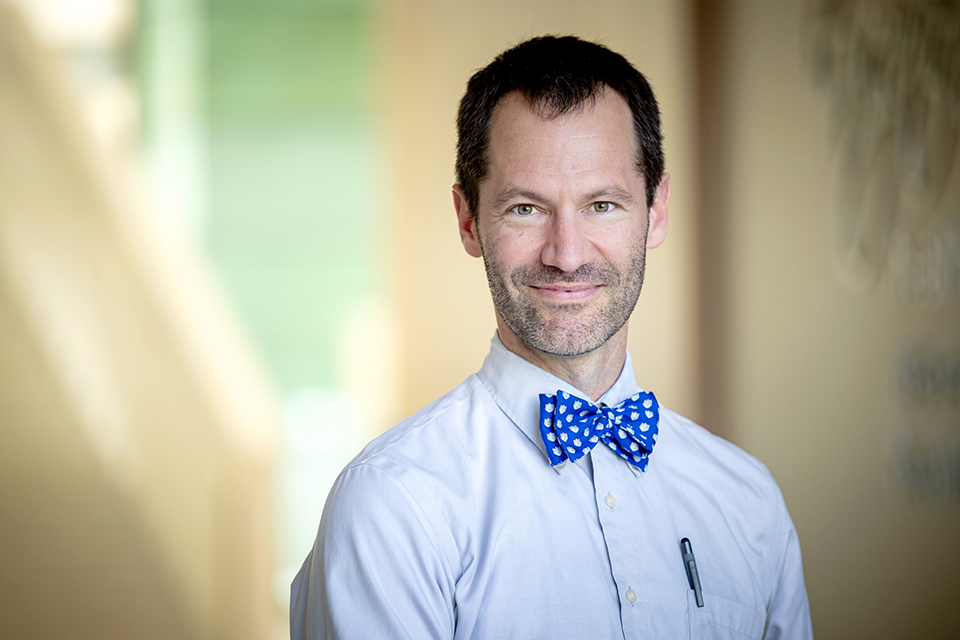
Martin Schoen, M.D., assistant professor of medicine and a member of the Saint Louis University AHEAD Institute. Photo by Sarah Conroy.
Metastatic prostate cancer accounts for 5–10% of all prostate cancer diagnoses, but it is responsible for nearly 50% of prostate cancer-related deaths. Since 2015, the prognosis of metastatic prostate cancer has improved with the introduction of new hormonal treatment and chemotherapy combined with androgen deprivation therapy in the first-line setting.
“In the last 10 years, several new therapies have been created that have made a dramatic impact in clinical trials,” said Schoen, lead author of the study. “We wanted to study this in the general population to assess whether these breakthroughs were making its way to them.”
The study reviewed two national datasets to identify the health outcomes of men with prostate cancer, one of the most common cancers in veterans. The cross-sectional retrospective study included male patients first diagnosed with prostate cancer between the years 2000-2019. Schoen and his team analyzed datasets of 58,859 men from SEER (Surveillance, Epidemiology, and End Results) and 14,904 men from the Veterans Affairs Central Cancer Registry (VACCR).
The SEER Program of the National Cancer Institute (NCI) collects and publishes cancer incidence and survival data from population-based cancer registries covering about 48% of the U.S. population. The VACCR collects cancer diagnosis and treatment information from the 132 VA Medical Centers that treat veterans with cancer.
The study focused on the survival of men in different age groups. Schoen and the research team found that the median overall survival in patients younger than 70 significantly improved in the U.S. population from 2000 to 2019. Still, there was little change in men over 70 during the same period.
The study also found that overall survival rates were similar in SEER and VHA. Schoen, a Navy veteran who works as a hematologist/oncologist at St. Louis Veterans Affairs Medical Center, said he was pleased the data showed that in prostate cancer care, veteran care is as good or better than the treatment men receive in the general community.
The study notes that while new treatments are available and increased overall survival has been observed in clinical trials, researchers cannot assume these developments improve disease management in clinical practice. The overall survival of men with metastatic prostate cancer is lower in clinical practice than in clinical trials, as patients are typically older with more health conditions.
Researchers say further study is needed as the study is limited by lack of data on men with other medical problems, such as heart disease or diabetes.
This study was supported by the Prostate Cancer Foundation Igor Tulchinsky, Robert Taubman Sandler – PCF Valor Young Investigator Award, and Department of Defense grant No. W81XWH-22-1-0602.
Additional authors include Bruce Montgomery, M.D., VA Puget Sound Healthcare System, Fred Hutchinson Cancer Center and University of Washington School of Medicine; Lukas Owens, VA Puget Sound Healthcare System and Fred Hutchinson Cancer Center; Saira Khan, Ph.D., Washington University in St. Louis School of Medicine; Kristen Sanfilippo, M.D., Washington University in St. Louis School of Medicine; and Ruth B. Etzioni, Ph.D., Fred Hutchinson Cancer Center and University of Washington School of Medicine.
Latest Newslink
- Kathryn Mitchell Pierce, Ph.D.: 1955-2025Kathryn Mitchell Pierce, Ph.D., associate professor of educational studies, died Wednesday, Dec. 10, 2025. She was 70 years old. Pierce joined Saint Louis University in 2015 as an assistant professor in the School of Education. Initially a literacy specialist in the undergraduate program, she eventually taught and mentored across all levels at the School of Education. She became an associate professor in 2022.
- Saint Louis University Student Speaks About Leadership and Disability at Ignatian Family Teach-In for JusticeSaint Louis University senior Grace LoPiccolo shared her personal leadership journey at the 2025 Ignatian Family Teach-In for Justice. The event, held annually in Washington, D.C., is the nation’s largest Catholic social justice advocacy day.
- SLU Research Shows Surge in Alcohol-Related Liver Disease Driving ‘Deaths of Despair’Researchers at Saint Louis University School of Medicine say deaths from alcohol-related liver disease have surged in recent years, and the increase is hitting people without a college degree the hardest. While nearly every demographic group is seeing higher death rates—including those with college degrees—the gap between economically disadvantaged groups and more affluent ones is growing, according to new research.
- Saint Louis University Joins Multi-Disciplinary Research Team to Enhance Stress Resilience in SorghumSaint Louis University is part of a multi-disciplinary team, led by the Donald Danforth Plant Science Center, to deepen the understanding of sorghum, a versatile bioenergy crop, and its response to environmental challenges.The U.S. Department of Energy (DOE) Biological and Environmental Research (BER) program supports the three-year $2.5 million project for Genomics-Enabled Understanding and Advancing Knowledge on Plant Gene Function. Saint Louis University will receive $437,039 for its portion of the study.
- SLU Graduates Celebrated at Midyear CommencementSaint Louis University celebrated its Midyear Commencement on Saturday, Dec. 13, inside Chaifetz Arena. More than 1,900 guests watched as 600-plus SLU students walked across the stage and left as graduates.
- Why Do Raccoons Cross the Road? SLU, St. Louis Zoo Research Shows They Don'tA new study led by researchers from Saint Louis University, the Saint Louis Zoo, and partner organizations set out to understand how raccoons use space in one of the nation's largest urban parks.