




Running Interference: Scientists Block Viral RNA, Aim to Cure Hepatitis B


Researchers Eye ‘Functional Cure’ for Hep B by Adding to Drug Combo Arsenal
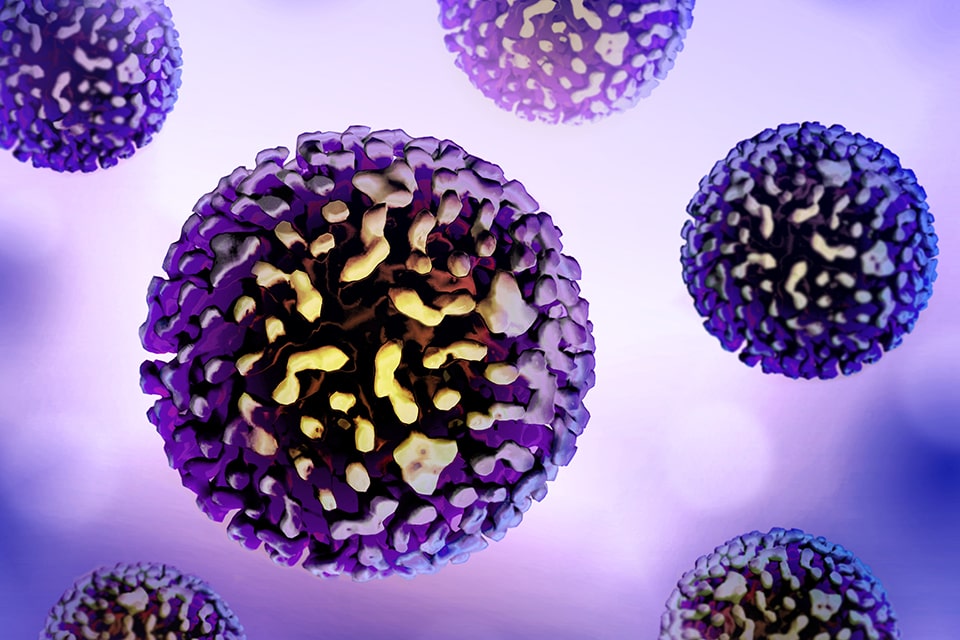
Hepatitis B virus, a killer of more than one million people each year, is a notoriously wily virus, often lingering and resurfacing even after treatment. But, thanks to a new class of drugs, it’s luck may be running out.
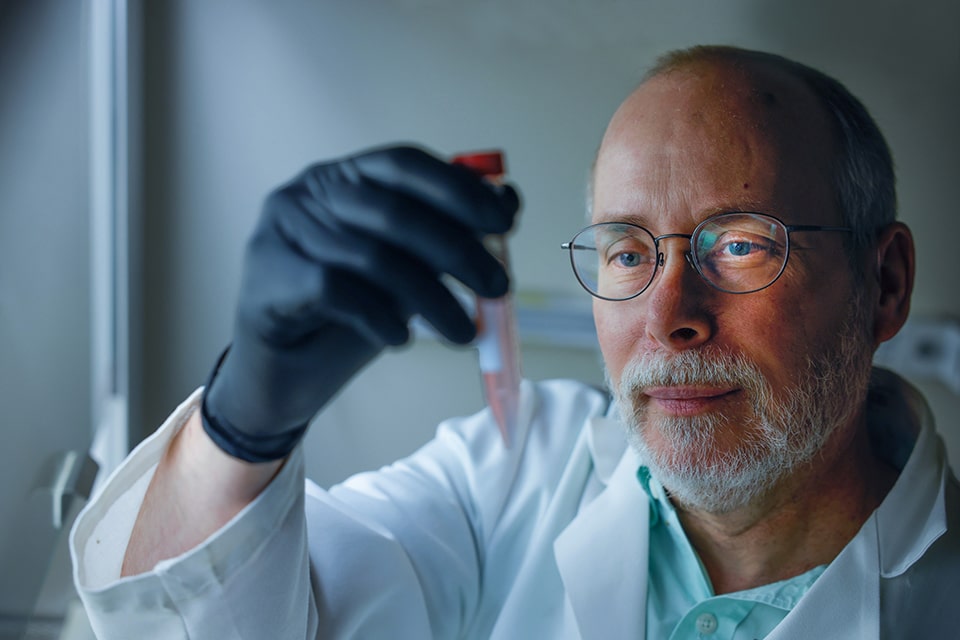
John Tavis, Ph.D., professor of molecular microbiology and immunology at Saint Louis University School of Medicine and one of the paper’s authors. Photo: Sarah Conroy
In a recent paper published in Science Translational Medicine, scientists report that a class of drugs, called RNA interference (RNAi) therapeutics, represent a major advancement in the treatment of chronic HBV infections, expanding treatment strategies by addressing viral antigens, silencing the virus and helping to reinvigorate the body’s immune response. The drugs will most likely be given to patients in combination with other medications, and researchers hope that their addition to drug combination therapies will bring us closer to a functional cure.
In spite of effective vaccines and treatments for the virus that has chronically infected around 256 million people worldwide, a cure has so far evaded scientists. Most who are infected as adults with HBV clear the infection right away. But, for some, especially people infected as infants, the infection persists. Chronic infection can lead to liver damage, cirrhosis and liver cancer. HBV is most often transmitted through blood, sexual contact or from mother to child.
Researchers believe that between 20 and 40 percent of those with chronic HBV infection will die from it if they do not receive treatment, usually from liver failure or liver cancer. A progressive disease that lingers for decades, Hepatitis B causes half of all liver cancer cases and it erodes quality of life, causing liver fibrosis and cirrhosis.
“A functional cure means eliminating the viral DNA and a viral protein called the surface antigen, which accumulates in high levels in the bloodstream, for at least six months post-therapy,” said John Tavis, Ph.D., professor of molecular microbiology and immunology at Saint Louis University School of Medicine and one of the paper’s authors. “If you achieve that, it’s very unlikely to come back. It’s the equivalent of a natural clearance of the virus. And, a person’s risk of future health problems is not going to be much higher than someone who had an acute infection and then cleared it.”
Doctors and scientists would be elated to be able to offer their patients a functional cure. Even so, they don’t describe this as a true cure for two reasons.
“Ninety-five percent of people who catch HBV as an adult will get a mild case of hepatitis and then clear it,” Tavis said. “But, even those people sometimes maintain some replication-competent virus in their body. And if they’re immunosuppressed, it can come roaring back. That’s one aspect that prevents it from being really a true cure. The other aspect is that when a person is infected with HBV, some of its viral DNA is permanently inserted into a person’s DNA. Though that fragment isn’t capable of replicating, it can still produce some viral antigens, and it can be cancer causing.”
Nevertheless, a functional cure would save millions of lives and ultimately limit the spread of the virus. And, researchers believe we may be closing in on a strategy to reach it.
A Three-Pronged Attack
The paper’s authors say a functional cure could likely be reached using several drugs together in combination therapies. In addition to replication inhibitors, which stop the virus from making more copies, they are especially enthused by drugs that interfere with viral antigen production. A third arm of the approach would tap drugs that stimulate the immune system to enlist the body’s support in fighting off the virus.
Reviewing the mechanisms of the virus and current classes of drugs, they say it is becoming clear that viral antigens, which are viral proteins, are not only involved in forming and replicating the virus, but also work to suppress the immune system.
“If you suppress the immune system, your body has a hard time controlling the infection,” Tavis said. “It's like your body is fighting the virus with one hand behind its back.
“We’re really excited about some of these RNAi’s because they seem to have two modes of action, both suppressing the viral antigens and turning on the immune system. There is a particular drug we reviewed, Bepirovirsen by GlaxoSmithKline, that not only suppresses HBV for many months, even after the drugs is stopped, but it also has a second mechanism that is triggering the immune system to go in and help with the job.”
“We want to turn down the smokescreen that the virus is putting up, all of those extra virus proteins that are in the bloodstream, by getting rid of the antigens. Then we want to turn on the immune system, all the while blocking viral replication,” Tavis said. “If we do those three things together, we’re eventually going to clear the virus.
Reviewing the data from drugs currently in clinical trials, researchers believe a functional cure may be in sight.
“So, how close are we? In clinical trials, the best combination therapies that are out there, which often include these RNAi’s, are curing around 30% after about a year to a year and a half worth of treatment,” Tavis said. “That’s a lot better than the 5% standard of care will do. So, we’re making steady progress. Though we’re not there yet, it’s very promising given the complexity of what we’re facing.”
Other authors on the paper include Matteo Iannacone, IRCCS Ospedale San Raffaele, Milan, Italy; Cristian G. Beccaria, IRCCS Ospedale San Raffaele, Milan, Italy; Lena Allweiss, University Medical Center Hamburg-Eppendorf, Hamburg, Germany; Julie Lucifora, Centre International de Recherche en Infectiologie, University of Lyon, Lyon, France; Adam J. Gehring, University of Toronto, Toronto, Canada; and Maura Dandri, University Medical Center Hamburg-Eppendorf, Hamburg, Germany.
Established in 1836, Saint Louis University School of Medicine has the distinction of awarding the first medical degree west of the Mississippi River. The school educates physicians and biomedical scientists, conducts medical research, and provides health care on a local, national and international level. Research at the school seeks new cures and treatments in five key areas: infectious disease, liver disease, cancer, heart/lung disease, and aging and brain disorders.
As a nationally recognized leader in research and innovation, SLU is an R1 research university, advancing groundbreaking, life-changing discoveries that promote the greater good.
Latest Newslink
- We Should Treat More People with Hepatitis B, SLU Expert SaysIn a pair of articles published in Lancet Gastroenterology and Hepatology, scientists lay out the case for why we should expand treatment recommendations for people with hepatitis B.
- Belize2020 Looks Ahead at SLU SummitEarlier this summer, Belize2020 organized a summit at Saint Louis University. Ten years after the coalition was created, with strong support from SLU to support Jesuit ministries in Belize, organizers felt the time was right to meet again.
- William L. Clay Sr., 1931-2025One of SLU's first African-American graduates, former Congressman William L. Clay Sr., died July 17, 2025, at the age of 94. He served in the U.S. House of Representatives for 32 years, becoming a towering figure in the fight for civil rights and social justice in St. Louis and nationally.
- A Camp Friendship that Stirred Up Lifelong BondsIn the summer of 2005, Mary Kate Keenoy (Chaifetz Grad '22) and Genevieve Willman met at SLU's Gardens to Tables culinary camp. What started as a shared interest in cooking grew into a lasting friendship that has endured for two decades.
- Bruce Bacon, M.D.: 1949-2025Bruce Bacon, M.D., professor emeritus of internal medicine, died Sunday, July 6, 2025. He was 75. Bacon was known globally for his expertise in all aspects of clinical hepatology, specifically hemochromatosis, viral hepatitis, chronic liver disease / general hepatology, and liver transplant. Bacon was also a member of the research team that discovered the gene for hemochromatosis, HFE, in 1996.
- SLU Launches William L. Clay, Sr. Institute of Civic Engagement and Economic JusticeThe Clay Institute will provide immersive learning experiences and hands-on training that address the social and economic challenges facing the St. Louis region and the nation. Institute programming will be available to all students with an interest in civic engagement and democratic participation.