




(Re)Living History at Cahokia Mounds


It’s one thing to read about an ancient civilization in the history books, but it’s a completely different matter when you hold that history in your hands.
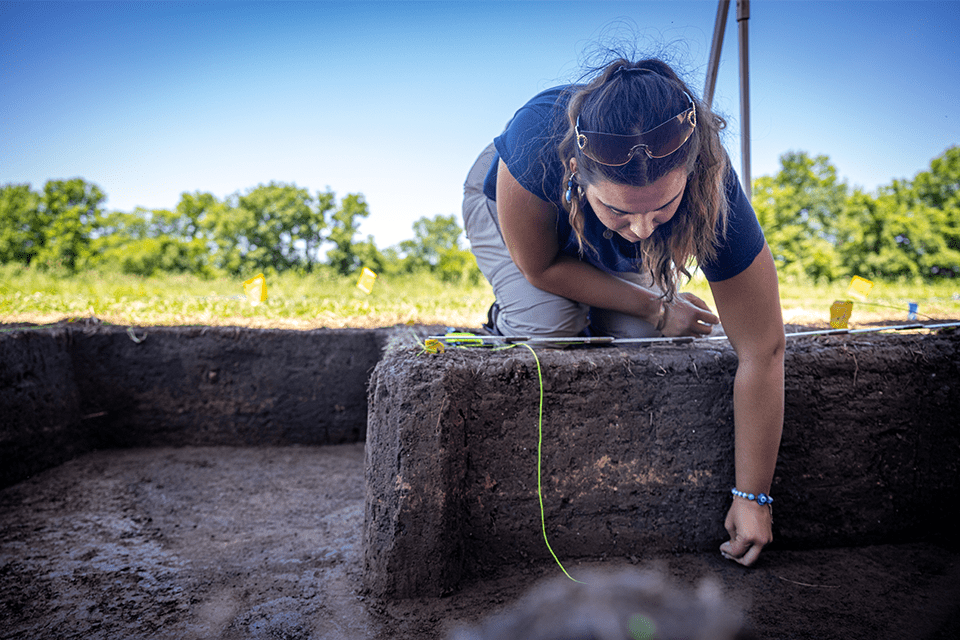
For four weeks this summer, students traveled from campus to the western periphery of Cahokia Mounds excavating multiple areas and making exciting discoveries. This year’s excavations found multiple drill bits, microdrills, pottery sherds, and more. Photo by Sarah Conroy
Saint Louis University students, along with SLU faculty, volunteers and visiting students from universities across the country, got a chance to unearth history this summer at archaeological excavations at Cahokia Mounds State Historic Site in Collinsville, Illinois.
For four weeks this summer, students traveled from campus to the western periphery of Cahokia Mounds, excavating multiple areas and making exciting discoveries. Cahokia Mounds is a prehistoric American Indian chiefdom dating from A.D. 1050 – 1350. During its height, perhaps 10,000 - 20,000 people lived in the city, where approximately 120 mounds existed, the largest of which is known as Monk’s Mound. The site is the largest and most complex prehistoric chiefdom north of Mexico.
“This area of the site is intriguing, because we think that it may be a civic ceremonial area attached to the chiefdom,” said Mary Vermilion, Ph.D., associate professor of sociology and anthropology at Saint Louis University. “When we first came to the site, the first structure we found had quite a few microdrills. Then a few years later, we found a sweat lodge. So with each dig, whenever we answer one question, 20 more pop up. Cahokia is an incredible investigative tool for not just what happened in prehistory, but how that applies to today's world, and we’re happy to do our part to try and answer that question, even as more questions pop up along the way.”
Under the supervision of Vermilion, students plotted the excavation sites, ensuring an accurate record-keeping of anything discovered in the dirt. When an artifact is found, it is photographed and logged, and then placed in a container to later be cleaned and recorded in the lab. This year’s excavations found multiple drill bits, microdrills, pottery sherds, and more. The group also found differentiating soil types, possibly pointing to multiple structures being built in the same spot, one over another.

This year’s excavations continue a tradition of SLU students breathing life back into an ancient civilization more than 1,000 years old and just minutes away from campus.
Brittany Murray, an archaeological SLU student from the 2011 excavations, returned to visit this summer and was brought right back to her days as an undergraduate.
“Ever since I was here in 2011, I have just loved being in the dirt,” Murray said. “It’s fascinating and fun, and you get to see so many cool things. SLU is always really good about providing research opportunities, community impact opportunities, they're all about servant leadership, which is amazing. So getting out to be here at an archaeological site that is so close to the university that you can go out and visit later in life is just amazing. And it's a really unique opportunity.”
Following each dig, the students return to the lab to spend two weeks carefully cleaning and cataloging each artifact recovered. The artifacts are analyzed and interpreted, and all records are complied, adding to the growing body of knowledge found throughout the years at the dig site. Each year, the results are also distributed to various research centers, for access by other researchers.
“I always tell students, ‘When you dig it, you destroy it’,” Vermilion said. “We have to keep very precise records, because once the dirt is disturbed and that artifact is removed, the context has been disturbed; it can never be the same again. So there are notebooks after notebooks after notebooks and all kinds of papers on their clipboards, all about what we’ve found. They keep journals for everything that they do. It’s a huge learning curve, but usually, by the end of the first week, they're operating like professionals. And that’s the point, we want them to get experience and do real archaeological work, because just like these artifacts, that knowledge is invaluable.”
For those within the archaeological and greater St. Louis community, continuing to learn about Cahokia and the pre-colonial history of the country is vitally important.
“It is very unique,” Vermilion said. “There are lots of archaeological digs that are done around the country. But Cahokia itself is such a unique site, and that presents unique opportunities and challenges for us all. We’ve been coming out here for years, it’s hot, it’s humid, but we love it.”
Latest Newslink
- SLU Commits up to $1.5 Million to Support Local Students Pursuing Social Work and Criminal Justice CareersThe new initiative — representing a commitment of up to $1.5 million in scholarship support over the next several years — is designed to strengthen the region’s social work and criminal justice workforce by expanding college access for talented local students.
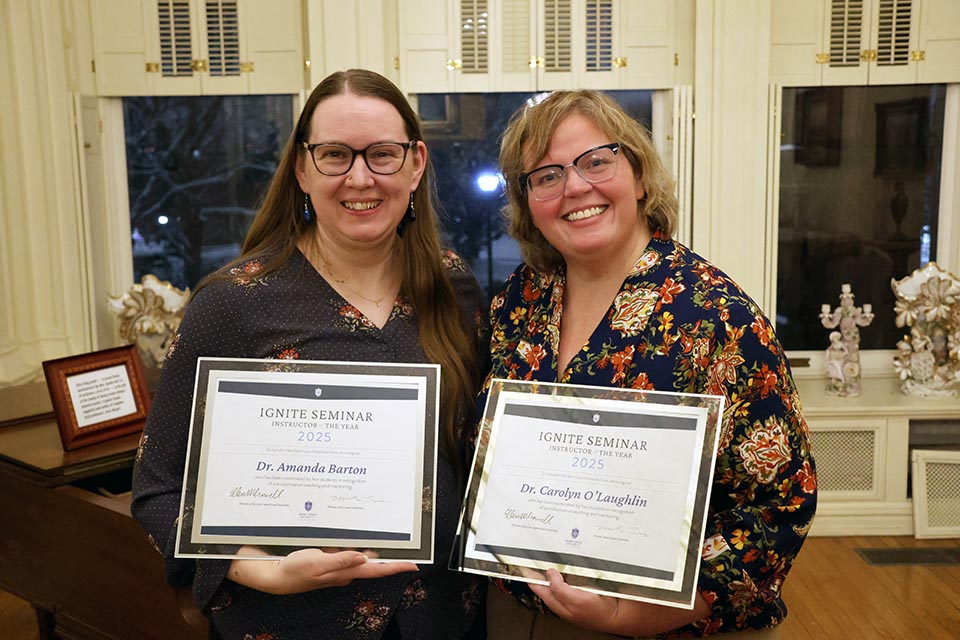
- University Core Honors Ignite Seminar InstructorsTwo Ignite Seminar instructors have been recognized with the 2025 Ignite Instructor of the Year Award. At a ceremony Tuesday night in Cupples House, Carolyn O'Laughlin, Ph.D. (Education) and Amanda Barton, Ph.D. (RISE Counselor) were honored by the University Core after being nominated by students in their Ignite Seminars.
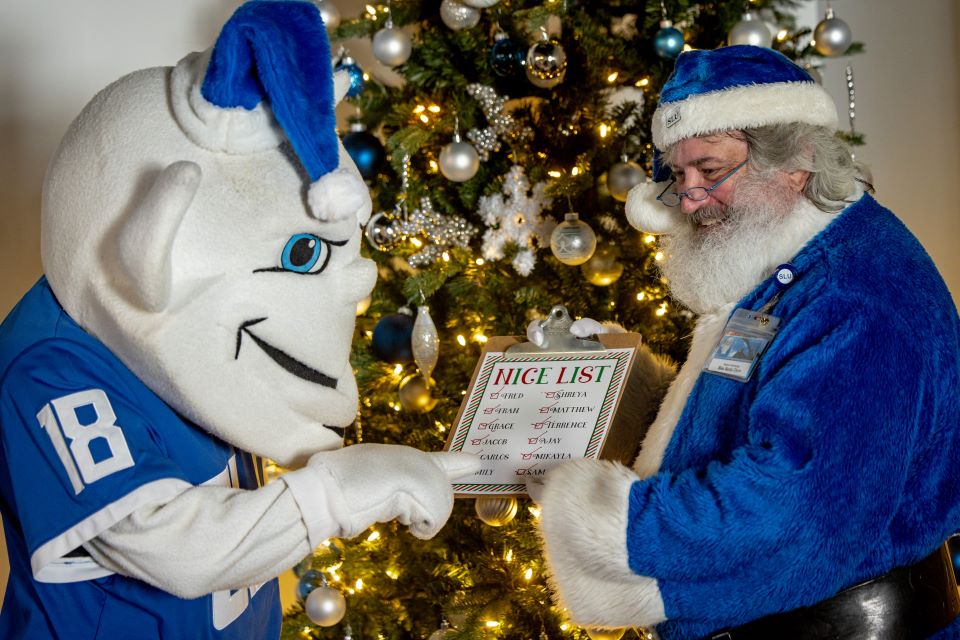
- Sharing Throughout the Season: Ways to Give Back at SLUThis holiday season, Saint Louis University is highlighting organizations that could benefit from the gift of time or donations, including the University's annual Blue Santa toy drive.
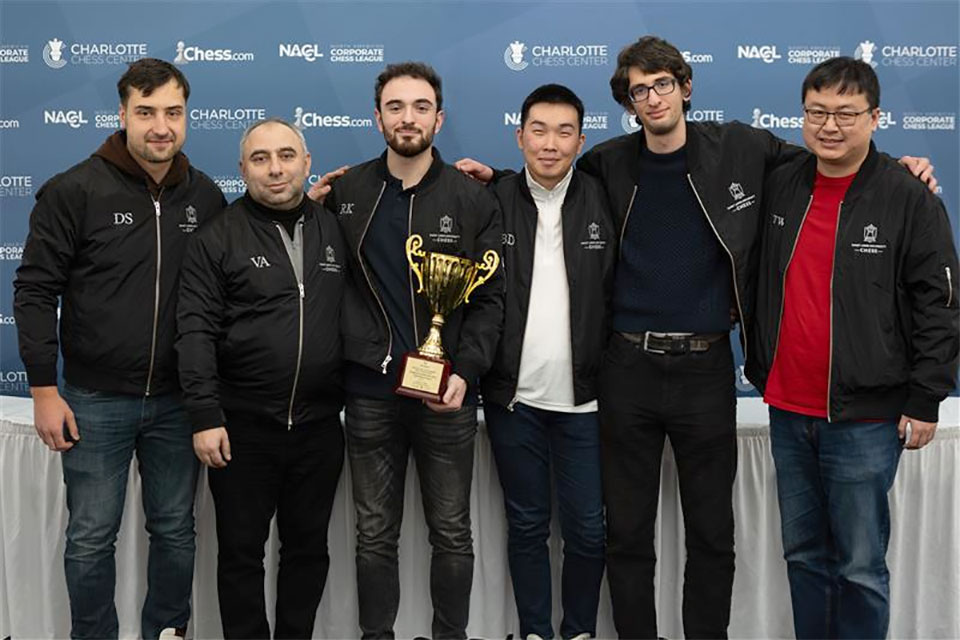
- SLU Wins Collegiate Chess League Back-to-Back SeasonsThe SLU Chess Team won back-to-back Collegiate Chess League titles, securing the Fall 2025 season championship. This win is SLU's fifth Collegiate Chess League title in the last six seasons.
- TurkeyPalooza Food Drive Helps Provide a Thanksgiving Meal to Individuals, Families in NeedTurkeyPalooza, the annual Campus Kitchen food drive and Thanksgiving food prep event, resulted in 200 individual Thanksgiving meals and 40 meal-prep boxes for families in the St. Louis community.
- Saint Louis University's Moore Honored by Missouri Lawyers WeeklySenior Associate General Counsel Christina Moore, J.D., has been recognized by Missouri Lawyers Weekly for her work as in-house counsel at a non-profit or government organization. Moore (Law '02) was honored at the In-House Counsel Awards, an event designed to recognize attorneys from different sectors for their contributions and work.