




ST. LOUIS - Saint Louis University is part of a multi-disciplinary team, led by the Donald Danforth Plant Science Center, to deepen the understanding of sorghum, a versatile bioenergy crop, and its response to environmental challenges.
The U.S. Department of Energy (DOE) Biological and Environmental Research (BER) program supports the three-year $2.5 million project for Genomics-Enabled Understanding and Advancing Knowledge on Plant Gene Function. Saint Louis University will receive $437,039 for its portion of the study.

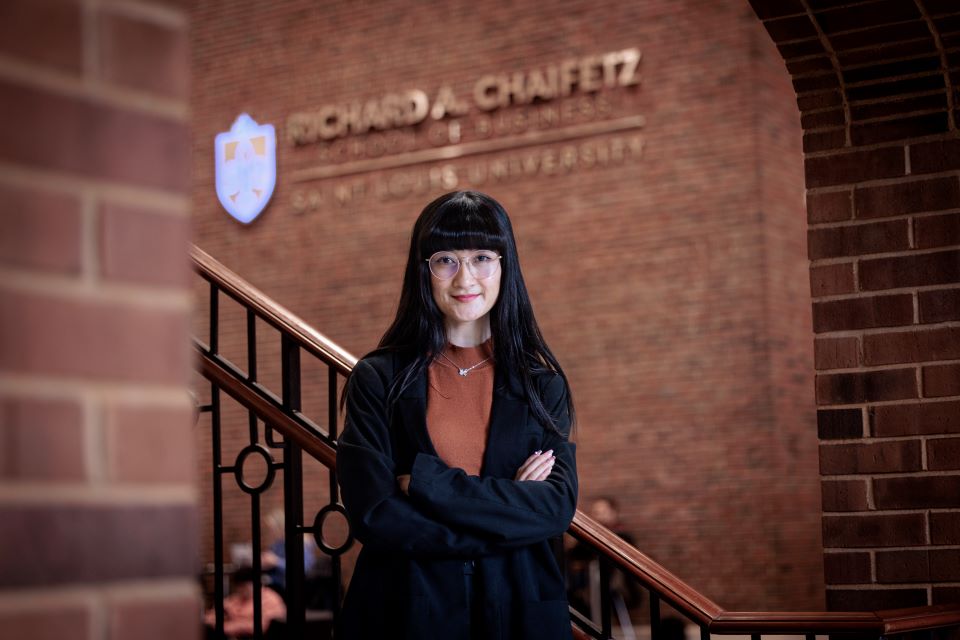
Vasit Sagan, Ph.D., professor of geospatial science, professor of computer science and associate vice president for geospatial research at SLU. Photo by Sarah Conroy.
Vasit Sagan, Ph.D., professor of geospatial science, professor of computer science, associate vice president for geospatial research at SLU and director of the Remote Sensing Lab, is the lead investigator at Saint Louis University.
The project principal investigator is Andrea Eveland, Ph.D., a member at the Donald Danforth Plant Science Center. Founded in 1998, the Donald Danforth Plant Science Center is a nonprofit research institute with a mission to improve the human condition through plant science.
The team also includes Duke Pauli, Ph.D., associate professor in the School of Plant Sciences and Giovanni Melandri, Ph.D., assistant professor in the School of Plant Sciences from the University of Arizona. Together, this cross-institutional team brings complementary expertise in plant genetics and genomics, stress physiology, transformation and gene editing, remote sensing and phenotyping, and GeoAI.
Tailoring crop productivity to variable growing environments, including resilience to and recovery from weather episodes such as flash droughts, is critical to expanding production ranges. This is particularly important for bioenergy crops to ensure they do not compete with food supplies while enhancing agronomic resilience and sustainability. Sorghum is a cereal crop with natural resilience to drought and heat stresses and is therefore an attractive system for developing crop production on resource-limited land.
The project explores the natural variation and gene networks underlying sorghum’s remarkable stress resilience and seeks to define the functions of critical genes and how they are regulated.
A unique aspect of the project is access to state-of-the-art, multi-scale remote sensing capabilities and GeoAI phenotyping tools at two contrasting field sites: a highly productive mid-western environment at the Danforth Center Field Research Site in St. Charles, MO, and a hot, arid environment at the University of Arizona's Maricopa Agricultural Center in Maricopa, AZ.
Advanced phenotyping data analytics pipelines have been developed as part of other DOE-funded initiatives through Pauli’s team at the University of Arizona and Sagan’s team in the Remote Sensing Lab at Saint Louis University. These tools will be used to extract information on physical traits, including multi-dimensional attributes and those not immediately visible to the naked eye, such as light reflectance, which can be used in predictive models for crop productivity in contrasting field scenarios.
“By combining remote sensing technologies with advanced GeoAI, we can automate the entire phenotyping pipeline—from data collection and calibration to large-scale analysis across hundreds of sorghum genotypes,” said Sagan. “Field robots, drones, and satellites give us a multi-scale view of how plants grow and respond to changes in the environment. This level of insight is essential to help identify genetic markers that contribute to a plant’s response to environmental extremes and ultimately enhance sustainable bioenergy.”
Eveland and collaborators will leverage the incredible genetic and phenotypic diversity found in sorghum to examine how responses at the molecular level, such as gene expression, lead to whole-plant morphological and physiological changes in response to environmental challenges. High-resolution, sensor-based phenotyping will be conducted on a variety of diverse sorghum lines throughout their entire growth cycle in various field environments. Since the genomes of all these lines have been sequenced, advanced genomics and gene editing methodologies will be integrated to help guide predictions of gene function in sorghum, ultimately linking genotype to phenotype.
“There is extraordinary genetic diversity underlying sorghum’s adaptation to a wide range of environments, and we want to tap into this in a precise way to inform engineering and breeding strategies for future climates,” said Eveland. “A deep knowledge of the genes and molecular pathways that contribute to abiotic stress resilience is critical for developing crops that thrive in stressful or dynamic environments - a major challenge is identifying those that are most relevant in real field scenarios and how they function directly in the crop system.”
About Saint Louis University
Founded in 1818, Saint Louis University is one of the nation’s oldest and most prestigious Catholic research institutions. Rooted in Jesuit values and its pioneering history as the first university west of the Mississippi River, SLU offers more than 13,300 students a rigorous, transformative education that challenges and prepares them to make the world a better place. As a nationally recognized leader in research and innovation, SLU is an R1 research university, advancing groundbreaking, life-changing discoveries that promote the greater good.